Piracy and Robbery

Asset 1 1

Overview

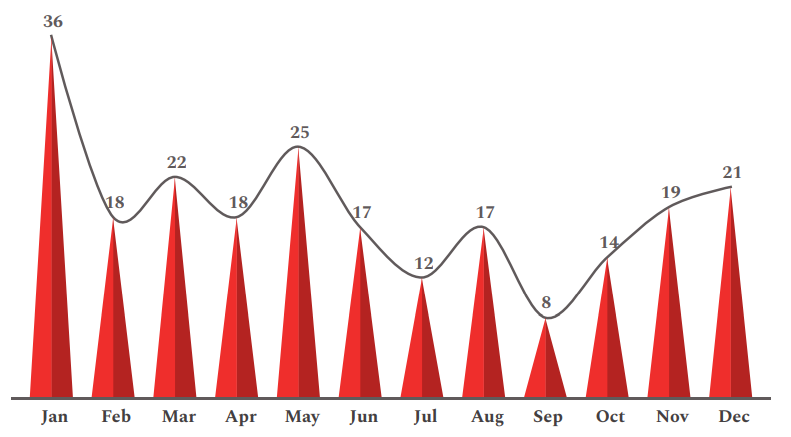
During 2024, IFC-IOR recorded 227 Piracy and Armed Robbery incidents, a 17% increase from 194 in 2023. Of these, 16 incidents were monitored on the high seas and 211 were within the EEZ of coastal states. The incidents averaged 19 per month (increased from 16 in 2023). Notably, 74% incidents were violence-free, and three incidents caused injuries to crew members.

Screenshot 2026 01 19 110447
Screenshot 2026 01 19 110645
Screenshot 2026 01 19 111109

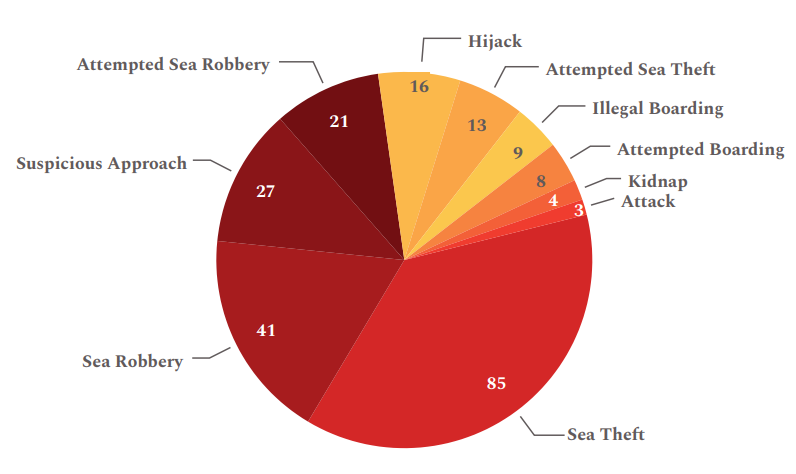
The incidents have been grouped into ten sub-categories, which include sea theft (both actual and attempted – 98), sea robbery (both actual and attempted – 62), suspicious approaches (27), hijacks (16), illegal boardings (09), attempted boarding (08), kidnaps (04) and attacks (03), (see glossary for definitions).

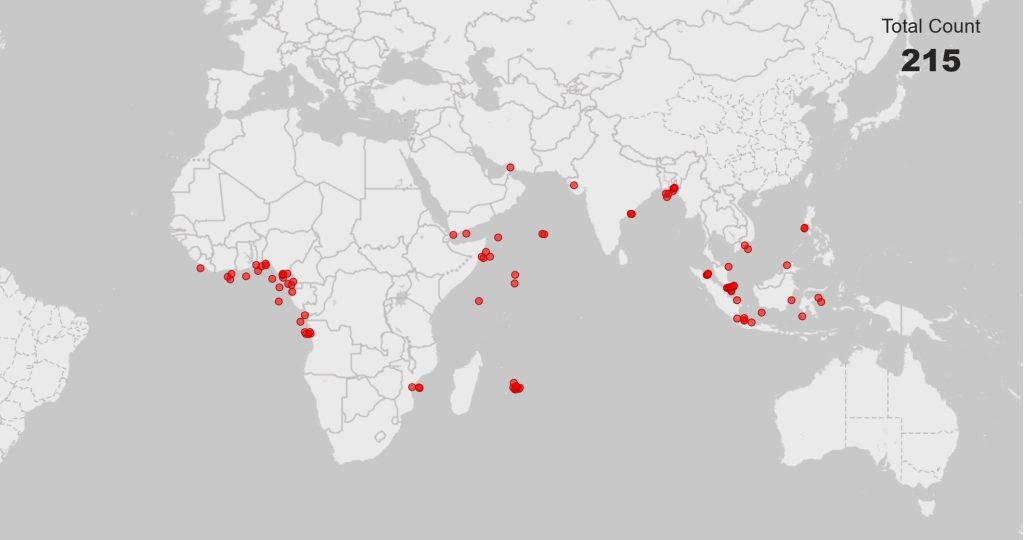
The incidents have been categorised into five key regions for comprehensive analysis: Gulf of Guinea (29), West Asia (16), East Africa (65), South Asia (19) and Southeast Asia (98). This classification aims to better understand patterns and trends across these diverse areas.

Comprehensive Intelligence

Structured analysis of maritime security incidents across the Indian Ocean Region

Incident Overview

Key Insight: 227 incidents recorded in 2025

i

In 2025, the Centre recorded 227 incidents of Piracy and Armed Robbery, as compared to 227 incidents in 2024. The Piracy and Armed Robbery cluster is further categorised into hijack, kidnap, illegal boarding, attack, sea robbery, sea theft, attempted sea robbery, attempted sea theft and suspicious approach analysed across Gulf of Guinea, West Asia, East Africa, South Asia and Southeast Asia.

Dual Trend Analysis

Key Insight: Emergent high-risk behaviour off Somalia in late 2025

📈

The 2025 Piracy and Armed Robbery landscape revealed a dual trend which featured low-impact petty thefts dominating Southeast Asian waters during the first half of the year, contrasted by emergent high-risk behaviour off Somalia towards the end of 2025. A series of suspicious approaches and illegal boardings off Somalia signalled that pirate action groups still possess the capability to mount classical piracy attacks.

Assessment of Piracy off Somalia

Key Insight:Pirate action groups retain distant water attack capability

While piracy off Somalia has followed a sporadic pattern, remaining largely dormant for extended periods, such lulls should not be misconstrued as complete suppression. Incidents in 2025 have demonstrated that pirate action groups retain the capability to conduct distant-water classical piracy attacks against merchant vessels, underscoring the need for continued vigilance during transit through these areas.

Gulf of Guinea Patterns

Key Insight: 10 crew abduction incidents high-impact threat

📋

The Gulf of Guinea continued to reflect established patterns, with incidents majorly occurring at anchorages and in coastal waters, and only a few incidents reported beyond 50 nautical miles from the coast. Although a relative increase in violent encounters was observed, crew abduction for ransom (10 incidents) remained a high-impact and destabilising threat despite reduced frequency.

Maritime Security Efforts

Key Insight: Multinational co-ordination key to containing threats

🛡️

The sustained presence of multinational naval forces, improved information sharing and proactive shipboard measures were key contributors to containing incident severity and preventing escalation. Nevertheless, evolving tactics, environmental factors and regional enforcement gaps underscore that piracy and armed robbery remains a persistent and adaptive threat, requiring continued vigilance, co-ordinated maritime security operations and strict adherence to Best Management Practices (BMP MS).