
Topic F: Maritime Domain Awareness Challenges and prospects of Information Sharing and Interoperability in IOR
LTA CHONG De Xian — Republic of Singapore Navy — Pen Name: Harley Davidson
Introduction
The above describes various scenes from a 10 minutes viral video, of 4 men being brutally gunned down at sea. Unknown to the rest of the world, the incident came to light only under freak circumstances: The video was first uploaded to popular video-sharing website YouTube in 2014, and was later traced to a mobile phone left behind in a taxi on Queen Elizabeth’s Square in Suva, Fiji’s capital city. However, according to the Fiji Tuna Boat Owners Association, the incident did not happen in Fiji, but was a failed hijacking attempt by Somalian pirates on Taiwanese fishing vessels off the eastern coast of Africa. Authorities were later able to identify and track down a fishing boat seen in the video, but were unable to elicit much information from its captain. Despite having multiple witnesses on at least 4 ships, the incident was never officially reported, remaining a mystery with no identified victims and no verified location. Maritime security experts are saying there are more of such incidents involving unbridled killings that goes unreported in parts of the Indian Ocean. Even if piracy is not involved, it is often conveniently used as a cover for murders involving mutinied crew or petty thieves caught stealing. The chilling episode illustrated above highlights that there are serious incidents at sea that authorities within the Indian Ocean Region (IOR) are unaware of, which may be exploited by criminal networks and terrorist organisations, exacerbating maritime threats such as piracy and smuggling that have long plagued the region.
It is clearly reflective of the imperative need for international and regional actors in the Indian Ocean to gain the necessary knowledge and understanding of what transpires out at sea, otherwise known as Maritime Domain Awareness (MDA), in which the data collected can then go into informing policies and operations against any maritime security threats. The Indian Ocean is one of the most economically and strategically important water bodies in the world, and given the perils of piracy, smuggling and maritime terrorism that it faces, one would imagine that IOR actors will not only have strong information-gathering abilities, but also a robust infrastructural framework for information sharing and interoperability. However, this is far from reality: Information-sharing is hindered by the IOR’s lack of regional institutions for maritime security cooperation, and many IOR states are lacking in financial resources to develop competent information gathering capabilities, much less interoperability with their counter parts. Although there are existing information sharing centres (ISCs) in IOR, cooperation remains very limited. In view of the above, this paper will first look at what exactly is MDA, and the key challenges the region faces in establishing MDA. Based on these challenges, this paper argues that the best strategy for establishing effective MDA is to focus the region’s resources into the IOR’s existing information sharing outfits.
What is MDA?
The first of its kind, the US Maritime Security Policy Coordinating Committee (MSPCC) was established to guide and implement a coherent and effective National Strategy for Maritime Security (NSMS), not only for American agencies involved in maritime security, but also “the private sector and civil authorities” and international “allies and partners”. It was in the National Plan to Achieve Domain Awareness(NPADA) promulgated by the MSPCC that the term MDA was first introduced, as a part of a new maritime security thinking. Later, the NPADA was merged with the Global Maritime Intelligence Integration Plan to form the National Maritime Domain Awareness Plan (NMDAP) under the Obama administration. In both the NMDAP and its predecessor, the maritime domain is defined as “all areas and things of, on, under, relating to, adjacent to, or bordering on a sea, ocean, or other navigable waterway, including all maritime-related activities, infrastructure, people, cargo, and vessels and other conveyances”.
- Vessels
- Cargo
- People and Organisations
- Critical Infrastructure, Ports, Waterways and Facilities and the
- Environment
According to the NMDAP, MDA is guided by the following core principles: (1) to promote unity of effort, (2) fostering information sharing and safe guarding and the (3) facilitation of safe and efficient flow of legitimate commerce. Different from the air or space domain, the world’s oceans can be accessed with relative ease, which in turns means that it can be exploited extensively by maritime security threats. These threats are defined by the NSMS to include “nation-states, terrorists, transnational criminal activities and piracy environmental destruction and illegal immigration”. In response to these threats, it is clear from the onset that MDA was meant to be broad and encompassing, involving a wide range of domestic actors (i.e. military establishments, civil agencies, private industry academia etc.) and international partners, working in close coordination to facilitate MDA operations. The paper notes that a key cornerstone of MDA lies in “interaction and cooperation” with other states, facilitated by conventions, treaties and/or information sharing agreements. The importance of commerce underpins the need for MDA, as an “effective, shared understanding of the maritime domain” is the key to creating a safe and conducive environment for maritime trade to flourish.
In line with its core principles, the expressed purpose of MDA is to ensure timely and accurate information flow, in allowing for the most enlightened decision to be made in response to, preparation for and/or to prevent maritime security threats.18Although MDA does not direct actions, a clear understanding of maritime patterns of life and happenings at sea goes a long way to inform policy formulation and operational coordination. Effective MDA is not just the collection of data, but also the integrating and analysing of information, such that decision-makers can take effective and precise action. To fulfil this purpose, MDA’s goals include:
- increasing “transparency in the maritime domain” to “detect, deter and defeat” maritime threats,
- allowing for quick, responsive and decisive actions in response to all types of maritime threats through effective information sharing,
- expanding and to deepen partnerships to facilitate information flow, capacity building and interoperability, and to
- recognise sovereignty, navigational freedom, and the usage of global commons in accordance to international laws, while promoting and enhancing trade and commerce.
The NMDAP remains the single most authoritative publication on MDA and its constituents, despite the fact that it was explicitly written to coordinate American maritime security policies. As a general concept, MDA and its core principles, purpose and goals are not confined to a particular oceanic region or any one state. Hence, it is very applicable and useful for IOR states, in organising and developing their own maritime security infrastructure. However, the IOR presents its own unique set of challenges for MDA, and it is important for IOR states to recognise these obstacles and determine how best to overcome them.
Maritime Domain Awareness Challenges
The Indian Ocean Region
The IOR itself presents one of the key challenges to the establishment of MDA. Encompasses the entirety of the 3rd largest ocean on Earth with a combined coastline of 66,526 kilometres, the IOR is one of the world’s largest imagined geographical regions, which can be further divided into 5 sub-regions: the Middle East, the Red Sea and Horn of Africa, East Africa, South Asia, Southeast Asia and Oceania. A region encompassing such a vast geographical area presents great physical challenges for MDA, as it simply means that considerable resources will be needed to gather and synthesis information. The region is home to 2.65 billion people, accounting for more than 39% of the world’s population, consisting of a myriad of races, languages, religions, political systems. It is therefore not surprising that a region of such diversity does not share a common identity, with little history of regional cooperation. The Indian Ocean Rim Association (IORA) is the only regional platform allowing for dialogue at a government-to-government level, but despite the increasing importance of security matters within the IOR, its focus remains exclusively on economic cooperation. The only regional security forum is the Indian Ocean Naval Symposium (IONS), which facilitates meaningful dialogue between naval establishments and maritime security agencies. However, as explained earlier, MDA requires broad-ranging cooperation that straddles between the civilian and military domain, and more often than not these matters fall under the ambit of ministries and government leaders, which the IONS does not cater for. The IOR is hence lacking in regional security cooperation and platforms for engagement and dialogue at various levels, which in turn makes it difficult for MDA efforts to be established.
Given the maritime nature of the region, many IOR states are reliant on trade and other economic activities at sea for their economic prosperity. Several of the world’s most strategic chokepoints and busiest sea lanes are located within the IOR, plied by vessels carrying 66% of the world’s maritime oil trade, 33% of international cargo trade and 50% of global container trade flow. The IOR is also endowed with many valuable natural resources: it is estimated that 40% of the world’s offshore oil are produced in the Indian Ocean; it also supports some of the world’s most heavily exploited fisheries, and mining operations on the many beaches and offshore placers in the IOR that holds significant heavy mineral ores deposit. Even until recently, a large natural gas hydrate with potential for production was found in the Indian Ocean. However, the IOR suffers from various maritime threats that continues to adversely affect maritime commerce in the region. Although Somalian piracy have gone down significantly due to concerted efforts by international navies, a slight resurgence have been detected, and many pirates have switched to smuggling operations to sustain their income. Piracy remains a big problem in Southeast Asia despite a steady decline since 2013, and in addition, there has also been a surge in kidnapping-for-ransom by militant insurgents in the Sulu and Celebes Sea. The 26/11 attack on India by terrorists from the sea, and the missile attack on Saudi Arabian warship by Yemini militants highlight how maritime terrorism remains a huge threat for all IOR states. The dogged persistence of piracy and other illegal maritime activities poses a direct challenge to the abilities of the IOR states to be able to detect and react to these developments, which will involve the development of a regional response to these maritime threats.
Given the region’s economic importance, the IOR need to contend with international strategic developments involving extra-regional actors playing out in the region as well, which mainly revolves around the American-Chinese strategic relationship. An increasingly dominant China has begun exerting itself in the IOR, by establishing its first overseas naval base in Djibouti and aggressively investing in mega-projects in the region, dubbed as the “String of Pearls” strategy. The United States has been the de-facto hegemonic in the region since 1945, and given its significant economic interest within the IOR, seeks to maintain the status quo and aims to balance China’s assertiveness globally, including within the IOR. These regional and international developments all have implications for the IOR and MDA, as there may be sensitivities over surveillance capabilities or asset deployments which are otherwise necessary for MDA, and the potential fallout may hinder or forestall MDA efforts in the region.
Historical Legacy of Colonialism
The historical experience of a state and its people can have effects that last well beyond its immediate timeline. Despite the region’s many differences, a common thread that runs through many IOR states is their experience with colonialism. As illustrated in Figure 1 below, the vast majority of the IOR’s territories were held by European colonial powers. Even though a few countries such as Thailand and several Gulf monarchies were not formally colonised, their independence came at a price: Thailand had to cede its southern territories to British Malaya, and many Gulf States were protectorates of France and the United Kingdom. This period of colonialism has left an indelible mark on the region, and the impact lingers unto today. Many of the region’s conflicts can be traced to past colonial policies, some of which includes demarcating territories without consulting existing social or cultural divisions, privileging certain ethno-social groups while marginalising others, or the formation of “non-democratic or non-participatory” government institutions.
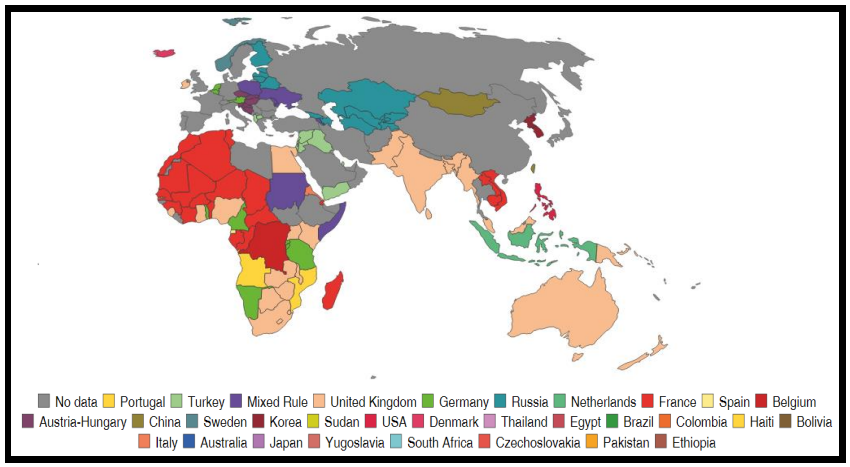
The Indian-Pakistan rivalry has simmered for decades, remaining one of the most dangerous conflicts in the world due to its nuclear dimension. The protracted conflict has its roots in the Partition of India, which hastily divided British India into predominantly-Hindu India and Muslim Pakistan. The partition was not only ineffectively carried out, but left the two newly independent states with a number of outstanding territorial conflicts. Although most have been resolved, the Kashmir quagmire remains a flashpoint in the relationship. By forcing groups that consider themselves distinct from one another under a single, artificial identity, colonial powers simply desired greater territorial control. Inheriting these artificial boundaries, many of the former colonies sought to maintain and uphold these colonial divisions through violence or coercion. During the period of Dutch colonialization, Aceh held out as a centre of resistance against efforts to consolidate Dutch control over the entire archipelago, and it was only after a longdraw 30 years military campaign against the Acehnese did the region fell. When Indonesia became independent and the administration of Aceh was handed over to the Javanese central government, Acehnese elites claimed that they were not consulted on the matter, and they were not agreeable with the central government’s decision of merging Aceh into the Province of Sumatra that held a substantial Christian minority, and in response the Gerakan Aceh Merdeka (GAM) launched an armed rebellion that was only quelled with the granting of a significant degree of autonomy. Throughout the next few decades, the GAM initiated several waves of armed resistance which ended with a 2005 peace agreement, but not before 15,000 were killed.
Many of the former colonies within the IOR remains in abject poverty and political instability. The World Bank defines extreme poverty as living on $1.90 per day, but it too maintains measurement with higher poverty lines, as indicated in Figure 2, reflecting the shares of population living with per capita household consumption below 3.10 international dollars per day. From the 2014 map, it is clear than a large proportion of the IOR states, especially in South Asia and Eastern Africa, have more than 40% of its population living with less than $3.10, and not surprisingly, many of these states were former colonies. These states lack the infrastructure, institutions and experience for good governance, as many colonial powers relied on colonial administrators from their home-country, or concentrated colonial governance amongst a few privilege local groupings. According to a 2014 report on the IOR by the Centre for Strategic and International Studies, numerous IOR states face a combination of problems they are not able to break out of, many of which are traps of the past that may potentially bring about, or in some case already have resulted in, political upheaval and civil conflict. The paper identified these key challenges to be :
- political stability and non-violence
- economic stability
- national governance
- general unemployment
- youth unemployment
- education
- health

What the above translates to is that the legacy of colonialism has had a massive impact on the development of the IOR, presenting a tremendous challenge to the implementation of MDA efforts. Many IOR states do not have the financial means, operational resources or the technical expertise required for the implementing of MDA. Given the vast expanse of the Indian Ocean, the successful implementation of MDA requires dedicated and sustained surveillance and enforcement, which is difficult for many IOR states due to limited financial capabilities. Conflicts amongst states due to the legacies of colonialism, such as India and Pakistan, may prove to be a hindrance for extensive and committed cooperation that is required for MDA. The colonial experience further complicated the IOR’s complex social and political demographics, leaving many former colonies socially-fractured and lacking in abilities to self-govern. International cooperation is a key cornerstone of effective MDA, but given how the region is extremely conflict-prone both internally and externally, the implementation of an effective MDA framework faces great difficulty in navigating these sensitivities, and in ensuring that the regional MDA infrastructure will not be paralysed in the event of a bilateral fallout.
Increased Sophistication of Maritime Threats
Another key challenge to MDA efforts in the IOR is that maritime threats are growing in complexity and sophistication. Any MDA endeavours will need to ensure that these threats can be effectively countered, but the reality is these perpetrators are well aware of existing MDA limitations and loopholes, and have been exploiting these vulnerabilities to serve their own ends, constantly adapting to measures and tactics employed by maritime enforcement agencies. Since 2012, Combined Task Force (CTF) 150, the multinational naval coalition operating in the Horn of Africa region have made majority of the drug seizures on maritime routes used by heroin traffickers, seizing almost 11 tonnes of the drug between 2012 and mid-2017. The heroin that comes to the Eastern IOR are usually transported in containers to major shipment hubs before being trafficked worldwide. Despite the drug seizures, it is estimated that more than 35 metric tonnes of heroin is trafficked through the Eastern IOR’s main trafficking routes, beginning at the coast of Makran, before branching into the various East African states. Although this route is still heavily used for trafficking, shipment sizes have been reduced, reflecting a possibility that drug traffickers are concerned about the consignment seizures. The same trafficking networks have been involved in transporting heroin to the central sector of the Indian Ocean where there is no multinational task force operating, again suggesting that the seizures by CT5150 have alarmed the traffickers. A new route and innovative tactics have been observed to be employed by the traffickers, confirmed by the seizure of a major shipment travelling from Egypt to Greece. This route has only been reported earlier in 2017, and is trafficked exclusively at sea. Other evasive tactics such as switching cargo, changing the flag, name or registration of the vessel, are also being used. A report by Jane’s concludes that there is a “serious information gap” concerning the movement of major shipments of heroin, and the lack of seizures do not necessarily mean that trafficking has went down, but instead makes it even more difficult to map onwards routes. Many of the Eastern African states in the IOR such as Tanzania and Kenya are major heroin shipment hubs, but the lack of reporting on drug seizures compounds the problem, effectively concealing the flow of drug trafficking.
Technology is hailed as an enabler for MDA to enhance effective information flow, but it can also be used to by perpetrators of maritime threats to bolster their operational capabilities that can adversely impact the IOR. Somalian pirates have advanced beyond using technologically advanced equipment for their frontline operations, as they are known to exploit open-source data for back-end intelligence gathering, from which information are siphoned and disseminated to their ships for the formulation of strategies and target profiling. This effective use of technology for nefarious purposes, however, is not exclusive to piracy alone. The 26/11 attack mentioned earlier also featured the use of sophisticated technology to devastating effects. The perpetrators sailed across the Arabian Sea from Karachi to Mumbai, a journey made possible with precise GPS navigation. Communications were maintained with their handlers, using satellite phones that were difficult to trace and intercept, and through satellite television broadcasts, the handlers were able to keep tabs on the movement of the Mumbai police and National Security Guards, and coordinated the attacks accordingly. These technologies are widely available commercially, and extremely easy to use, complicating any efforts by authorities to track and monitor their usage. As law enforcement agencies race to counteract and neutralise maritime threats, criminal organisations are simultaneously trying to gain the same technological edge. The “narco-submarine” demonstrates the great lengths that such criminal organisations will go to in this cat-and-mouse game. In November 2006, a US Coast Guard cutter discovered a strange-looking submersible 100 miles off the Costa Rican coast, measuring 15 metres and carrying over 3 tons of cocaine. The shocking discovery threw the spotlight on how Columbian drug cartels were manufacturing these vessels to transport drugs across the Atlantic. Sitting just above the waterline with an extremely low freeboard, the vessels are notoriously hard to detect. These fibreglass submersibles have a low radar signature, and measures taken by smugglers to reduce infrared emission allows for these vessels to be extremely stealthy. It is believed that 80% of drug smuggled into the US came from the sea, and 30% of which are carried to American shores on these submersibles.
The design and capabilities of these submersibles have improved by leaps and bounds over the years, and more recently, as demonstrated by the first electrical “narco-submarine” seized by Columbian authorities, before it could start making its underwater runs. Estimated to have been built to the tune of US$1.5 million, the submersible was constructed from sheet metal, featuring underwater optics to aid underwater navigation, and boasted electrical jet propulsion engines powered by hundreds of battery cells. If operational, it is believed that the boat will be extremely difficult to detect, as it is fully submersible, generates little acoustic signature and is much more sea-worthy than its predecessors. Although these developments are confined to the Atlantic, the ramifications are potentially grave, even for IOR states. Back in 2008, former-US Vice President Joe Biden has told Congress that the drug trafficking was not the only danger such an innovation can pose, alluding to the fact that “home-made” submersibles are the perfect fit for acts of maritime terrorism. Although a study done by the Naval Postgraduate School Centre for Homeland Defence and Security has found that drug cartels have deliberately stayed away from militarisation of these vessels, these “narcosubmarines” are built to exploits the weakness of coastal surveillance and law enforcement detection in Central America, which again demonstrates how well suited these contraptions are for maritime terrorism. The threat of marine terrorists employing submersibles is not something new to the region: the Liberation Tigers of Tamil Eelam (LTTE), the separatist terrorist organisation that had waged decades of civil war against the Sri Lankan government, were found to be in possession of several submersibles. Its naval arm, the Sea Tigers, terrorised the waters off Sri Lanka, destroying naval vessels and running smuggling operations using indigenously built stealth boats, although it is unclear if the submersibles were ever used in their operations. As terrorist organisations grow in their mastery of technology, the development and use of submersibles in their operations, allowing terrorists to get close enough to high-value targets undetected to launch attacks, may become an eventual possibility. The increasing sophistication of maritime threats, be it greater flexibility, more complex strategies or the proficiency in harnessing technology presents a great challenge for IOR states in enforcing MDA.
Prospects of Information Sharing & Interoperability
In a region so large that renders physical enforcement difficult, lacking in a common identity and regional cooperation, having to contend with external actors and their interests, with complex demographics exacerbated by conflicts and competition resulting from colonialism, and increasingly complex and sophisticated maritime threats, the odds are stacked against any MDA efforts. In the cat-and-mouse game where each side is racing to gain an edge over the other, IOR states need to come up with strategies that can secure and sustain the upper hand over perpetrators of maritime threats. It is unlikely that given the MDA challenges faced by the IOR, a single model is able to address the MDA needs of the entire region. Prescribing a one-size-fits-all configuration will be overlyambitious and impractical, as it ignores the specific needs of different sub-regions and disregards pre-existing conditions that may hinder MDA efforts. The IOR can therefore consider leveraging on existing mechanisms that are well-established within the region to more effectively establish MDA across the IOR.
In Evelyn Goh’s “Great Powers and Hierarchical Order in Southeast Asia: Analysing Regional Security Strategies”, Goh introduced the theory of “OmniEnmeshment”, describing the strategy that Southeast Asian states has employed to keep the US engaged within Southeast Asia, through layers upon layers of bilateral and multilateral institutions. This intricate web helps to preserve a network of “sustainable relationships and exchanges” that contributes to integration in the long-term, deepening economic, security and political ties. Applying the logic in this theory to MDA efforts, the existing ISCs within the IOR can potentially act as key information nodes, and the information sharing channels between these centres comes together to form a network grid that enmeshes the IOR. The centres will need to continue building capacity through information sharing agreements, exercises and cross-training to create more layers of relationships that strengthens the enmeshment of MDA within the IOR. Focusing regional efforts on these key centres will not only bolster information sharing processes, but the barriers for interoperability will also be lowered. It is also important to consider the perspective of other parties involved in MDA, most importantly being the commercial vessels at sea. Streamlining the reporting process to and from these information nodes may potentially encourage greater participation and initiative to report incidents at sea.
The Path of Least Resistance
As mentioned earlier, the IOR has a number of established ISCs in various locations, and they have developed in accordance with specific strategic needs and pre-existing conditions within their area of operations. As such, given the region’s demographics, it is not impractical to assume that the process of establishing these centres did not come easy, and it is improbable that these efforts can be replicated elsewhere. It is therefore prudent to recognise their value and seek ways to enhance cooperation with these existing centres. By doing so, IOR states are pursuing the “path of least resistance” on the road to achieving effective MDA by leveraging on the existing MDA infrastructure within the IOR. The United Kingdom Marine Trade Operations (UKMTO) is one of these established information sharing outfits in the Middle-Eastern sub-region, a “Royal Navy capability” that aims to serve as a bridge for information flow between the military and international maritime trade. Operating out of an office in Dubai and supported by a data centre in the UK, the organisation was first deployed to the Middle East in 2001, as part of the UK’s commitment to the international anti-terrorism efforts. At its inception, the organisation’s purpose was to provide information on the security issues in the region, but it has since diverted its resources to anti-piracy and maritime security information sharing, and acts as the primary point of contact between merchant vessels and military forces, in the event of a pirate attack. The UKMTO is the first maritime security outfit operated by an external state with a vested interest in the IOR, and it truly represents the value that such an outfit can bring to the Middle East: being a neutral external party, the organisation has been able to operate unhindered by regional conflicts or competition in a fractious Middle East. The UKMTO maintains a series of Voluntary Reporting Areas (VRAs) concentrated in the Gulf of Aden, the Arabian Sea and the Horn of Africa, whereby vessels entering, transiting and leaving these areas reports to its office (as shown in Figure 3), which may trigger sensitivities if a local state decides to do the same.

In the sub-region of Southeast Asia, there is a different MDA infrastructure in place. First inaugurated on 27 April 2009, the Information Fusion Centre (IFC) is hosted in the Republic of Singapore Navy’s (RSN) Changi Command and Control Centre (CC2C), a hub that was built as a platform to bring together Singapore’s domestic agencies and international partners, to “advance multi-agency cooperation and inter-operability”. The IFC specialises in regional maritime security, and was set up to facilitate information sharing amongst regional maritime enforcement agencies. In 2014, the United Nations declared the waters of Southeast Asia to be the most dangerous in the world, due to its perennial problem with piracy: from 1995-2013, 41% of piracy incidents had occurred within Southeast Asia. It was against this backdrop that the IFC was established, amongst other initiatives undertaken by Southeast Asian states to reduce piracy incidents, such as the Malacca Straits Patrol Framework, which constitutes several programs to bolster the maritime security of the Straits of Malacca and Singapore (SOMS), including the “Eyes-in-the-Sky” Combined Air Patrols, the Malacca Straits Sea Petrol and the MSP Intelligence Exchange Group. 81 From these initiatives, it is clear that there is a collective political will amongst the Southeast Asian states to resolve the problem of piracy. It is because of these pre-conditions that has allowed the IFC to develop a key pillar supporting its operations, its unique integrated RSN-International Liaison Officer (ILO) structure, whereby an officer from a partnering state is stationed in the IFC, working together with RSN personnel in the centre’s daily operations. Singapore’s position as a regional maritime hub located in the central of maritime Southeast Asia had also been a strong factor influencing the establishment of a multinational ISC. From the above, it has illustrated how certain pre-conditions have allowed for the UKMTO and IFC to be established, and setting up another IFC or UKMTO elsewhere may not be entirely probable. Therefore, it will be beneficial for the region to consider bolstering MDA efforts by leveraging on these existing centres that have already navigated some of the obstacles of MDA. With greater support from IOR states, these existing IOR ISCs can also further enhance their information sharing capabilities for the good of the entire region.
Concentrating Resources & Bridging the Resource Gap
As illustrated earlier, one of the main hurdles to regional MDA efforts is the lack of resources amongst IOR states. Leveraging on the existing ISCs can help to bridge this resource gap by channelling the available resources to these key information nodes. In addition to the UKMTO, there are currently several other ISCs in the Western IOR. Initiated by the IMO and the European Union’s CRIMARIO, 3 ISCs were established in the cities of Sana’a (Yemen), Mombasa (Kenya) and Dar es Salaam (Tanzania) under the Djibouti Code of Conduct (DCoC). Another 2 centres launched earlier in 2017 in Madagascar and Seychelles are under the Programme to Promote Regional Maritime Security (MASE), an EU-funded project that was first launched in 2013. From their inception, these organisations were founded for the sole purpose of combating piracy and maritime robbery, although the signatories of the DCoC came together earlier in 2017 to ratify an amendment that broadened the focus of its ISCs beyond piracy to include other maritime crimes such as illegal, unreported and unregulated fishing and human trafficking. Having such a high concentration of ISCs with the same focus, within a single region may help tighten information flow and increase surveillance capabilities, but this may not be an entirely positive development. Because they are all externally-funded, the placement of these centres corresponds to the interests of these external actors, and given that significant trading routes are located in the western IOR, it is evident why the western IOR has such a high density of externally sponsored ISCs focusing on piracy and maritime robbery. There has been no clarity on how the 5 ISCs will work together, even though a strategic partnership has been signed in 2015. There is also no distinct differentiation between the primary purposes of both centres, and overlaps between memberships of various states – Kenya, Mauritius and Seychelles are participants in both projects – brings the efficiency and effectiveness of resource usage into question. Individually, it seems that the ISCs are not optimally utilised, as it was reported that the 3 DCoC ISCs have “operated mainly in principle”, and have “not achieved much visibility or produced outcomes”.
As such, it is indicative that the establishment of ISCs with little coordination may not be an adequate strategy, due to overlaps and duplications. Moreover, the ISCs would not have possibly been established without external sponsors, as the countries currently hosting the ISCs do not have the adequate financial resources and technical knowhow for such an endeavour. With this in mind, a more practical and flexible strategy needs to be considered. By leveraging on the existing ISCs within the region, resources can be pooled for more efficient usage. The Regional Cooperation Agreement on Combating Piracy and Armed Robbery against Ships in Asia (ReCAAP), first initiated by the Japanese government in 2006, is one of the region’s first government-to-government agreement that promotes cooperation against piracy and sea robberies. ReCAAP’s operations are carried out in the ReCAAP ISC, which is based in Singapore and overseen by a Governing Council, whose members represent each of the 20 states who are Contracting Parties (CP) to the agreement. Each CP contributes a voluntary amount to a common trust fund from which Re CAAP ISC draws its operational expenditure from. As there is no obligatory endowment needed, states can contribute to MDA efforts at their discretion. More importantly, such an arrangement inculcates a culture that regardless of demographics, all IOR states can contribute, and potentially benefit from MDA efforts.
Aside from the pooling of resources, another invaluable mechanism that an existing ISC within the region offers is the capability to bridge the resource gap that exist between IOR states. The RSN has invested significant resources in the IFC, in particular in the development of its Information Technology (IT) systems for supporting its information sharing operations. The IFC employs the Open and Analysed Shipping Information System (OASIS) and the Sense-Making, Analysis and Research Tool (SMART) for its operations. Indigenously designed, the system is configured and custom-built for the IFC and its operational needs: the OASIS is a “living repository” of information drawn from open sources, providing IFC analysts a one-stop archive to gather or investigate information, while SMART is an intelligent system that enables the early detection of threats by analysing realtime information and archived data, which allow it to build up figures and identify emerging trends. Used in tandem, the systems allow the IFC to sieve through immense amount of data with relative ease, freeing up manpower than can be diverted to support other operational requirements. The ILOs are able to leverage on these IFC systems and share the information with their respective Operational Centres (OPSCENs) without having to make hefty investments duplicating these functions, effectively bridging the said resource gap between different IOR states.
Capacity & Confidence Building
The strategy to leverage on existing ISCs in the IOR is essential a capacity and confidence building measure unto itself. As mentioned earlier, MDA requires concerted and coordinated efforts that cannot be undertaken by a single state alone, and for it to be effective, IOR states need to cooperate, or at least create the conditions necessary for cooperation. To varying degrees, the IOR ISCs have elements of international cooperation, and IOR states can participate in these MDA endeavours according to their comfort level. At the basic level, IOR states are able to exchange MDA best practices and knowledge management. Re CAAP ISC has over the years undertaken several initiative aimed at achieving this purpose. The Re CAAP ISC Piracy and Sea Robbery Conference is the ISC’s annual hallmark event, and over its 9 runs it has brought varied regional elements such as the shipping industries, maritime enforcement agencies and the academia together in exploring different themes pertaining to maritime security. Another initiative includes the ReCAAP ISC Capacity Building Workshop, which brings together operational-level officers from various agencies across the region, to share experiences and engage in table-top exercises. ReCAAP continues to engage the region with these endeavours: it has only recently concluded a customised training program on counter-piracy and maritime security in September 2017, for senior officials from maritime enforcement agencies across ASEAN states, a program it intends to run annually. Apart from establishing formal operational practices and competencies, these programs are platforms for MDA elements at various levels to interact and network, creating informal linkages between the key information nodes that strengthens the enmeshment of the IOR’s MDA infrastructure.
Moving beyond exchanging best practices and knowledge management, the existing ISCs also have in place mechanism for greater cooperation. The IFC’s integrated RSN-ILO structure is a result of a series of signed Memorandums of Understanding (MOU) that made the deployment of 16 ILOs from numerous navies to the IFC possible. Each MOU is established directly between the RSN and the potential signatory, and hence allows for flexibility in addressing constraints and challenges that each of the IFC’s partners. Till date, 128 ILOS from 23 countries have been deployed to the IFC, a testimonial to the value and effectiveness of the system. Because the integrated RSN-ILO structure allows military personnel from different navies to work together in close proximity, the IFC is able to establish a direct connection through the ILO to their respective countries’ OPSCENs, and the presence of a multi-national military work-group concentrated in the IFC allows for the pooling of resources and expertise that each country can potentially offer, facilitating quality evaluation, quicker sharing and reduced risks of misinformation. Having the ILOs within the IFC also provides a platform for greater interoperability, as they are involved in the informationsharing exercises that are held frequently by the IFC, such as the biennial Maritime Information Sharing Exercise (MARISX) and the ASEAN Maritime Security Information-Sharing Exercise. The latest rendition of MARISX in 2017 witnessed more than 35 navies and maritime enforcement agencies from 33 countries participating in the 4 days exercise. These exercises are important platforms for enhancing and standardising information sharing process, enhancing interoperability between different IOR states. Ultimately, what these different layers of engagement and capacity-building measures that the existing ISCs are able to offer is to socialise IOR states to the processes and benefits of MDA. Because of the regional challenges elaborated earlier, this will be a long-drawn process, and results will not show overnight. As such, the most efficient method will be do to do so via established ISCs that have successful infrastructure in place to facilitate the process.
Conclusion
In conclusion, what this paper has elaborated at length – to leverage on the experience and resources of existing IOR ISCs – is not the same as denying and discouraging other efforts at improving information sharing and interoperability in the IOR. Despite the fact that the waters of the central IOR, which are some of the most difficult areas for maritime surveillance with frequent incidents of maritime crime, there are currently no ISCs established in the area. India has recently taken up the mantle, initiating the construction of coastal surveillance radar stations in 2015, which will stretch from Seychelles, Mauritius, the Maldives and Sri Lanka when completed. Analysts have concluded that this project will enable the Indian Navy and its partners enhanced abilities to monitor the movement of vessels in the region. India has also initiated other capacity-building measures, such as donating a maritime surveillance aircraft to the Seychelles navy. India has also announced its intention of hosting an information sharing centre “to ensure maritime safety and security” during the 2017 IORA summit. These are all positive and encouraging developments for regional MDA prospects, and these efforts will surely go a long way in bolstering regional information sharing capabilities. What IOR states will need to do to ensure such efforts are sustainable and effective, is to consider the pre-conditions and strategic needs, and that any proposed strategies have to take into account the endemic challenges of the IOR.
Although the process will not be an easy one, the vision of a pan-regional MDA infrastructure within the IOR, one that is able to effectively enforce MDA surveillance and share information timely and efficiently across the entire Indian Ocean, is very much possible. However, the level of trust required for such an endeavour, and the recognition of the utility of MDA by IOR states will need to be cultivated in order to translate the vision into reality. In view of the challenges posed by the physical expanse of the IOR, the complications arising from its colonial past and increasingly sophisticated maritime threats, the practical value that the existing ISC scoffer is such that they are able to overcome these challenges, with greater support from IOR states. These established ISCs can concentrate resources of IOR states for greater effect, and help to bridge any resource gaps between them. These ISCs have also laid the groundwork and can provide the “path of least resistance” for the implementation of additional MDA efforts that may not be possible if an ISC is built from scratch. By focusing on the existing information sharing establishments, processes can be streamlined and simplified, preventing duplication and wastage. This strategy is also a capacity building measure unto itself, as it is structured to bring states together for networking and engagement with one another. Above all the other benefits and advantages, the existing ISCs will be able to socialise and enmesh the IOR states through various formal and informal linkages, and perhaps one day in the near future, as the region grow the bonds and relationships needed, and IOR states are able to fully recognise the utility of such a MDA construct, the vision can then truly become a reality.
Word count: 6948
(Excludingessay question, headings, citations and bibliography)
References
- Belton, Padraig. “Do You Have an AK-47 And Can You Swim.” BBC News, 9 Sep, 2016. http://www.bbc.com/news/business-37257236.
- Bueger, Christian. “Effective Maritime Domain Awareness in the Western Indian Ocean.” Institute for Security Studies Policy Brief (2017), 5.https://issafrica.s3.amazonaws.com/site/uploads/policy-brief104.pdf.
- Collins, Alan. Security and Southeast Asia: Domestic, Regional, and Global Issues. Singapore: Institute of Southeast Asian Studies, 2003.
- “Colombian army seizes first electrical 'narco-submarine' capable of carrying four tons of COCAINE before it could transport its Illicit Cargo.” The Daily Mail. http://www.dailymail.co.uk/news/article-4739460/Colombian-armyseizes-electrical-drug-narco-submarine.html.
- “Colonial powers, 1900”, Our World in Data, accessed 20 Nov, 2017, https://ourworldindata.org/grapher/colonialism-and-imperialism?year=1900.
- Cordesman, Anthony H. and Abdullah Toukan. The Indian Ocean Region: A Strategic Net Assessment. Washington, DC: Centre for Strategic & International Studies, 2014.
- Cordner, Lee. Maritime Security Risks, Vulnerabilities and Cooperation: Uncertainty in the Indian Ocean. New York: Springer, 2018.
- Cordner, Lee. “Rethinking maritime security in the Indian Ocean Region.” Journal of the Indian Ocean Region, Vol. 6, No. 1, 67-85.
- Dalrymple, William. “The Great Divide: The Violent Legacy of Indian Partition.” The New Yorker, 29 Jun, 2015. https://www.newyorker.com/magazine/2015/06/29/the-great-divide-booksdalrymple.
- Djibouti Code of Conduct Project Implementation Unit. International Maritime Organisation, Edition 1: June 2011-Jan 2012. http://www.imo.org/en/OurWork/Security/PIU/Documents/PIU_Brochure_1st_edition.pdf.
- Durand, Frédéric and Richard Curtis. Maps of Malaysia and Borneo: Discovery, Statehood and Progress. Kuala Lumpur: Tien Wah Press, 2014.
- “Enhancing Maritime Security through Closer Information Sharing.” Ministry of Defence Singapore. Accessed 20 Nov, 2017. https://www.mindef.gov.sg/imindef/press_room/details.html?name=18may17_nr2&date=2017-05-18#.Wh42SUqWbIU.
- “Fact Sheet: Information Fusion Centre (IFC).” Ministry of Defence Singapore. Accessed 19 Nov, 2017 https://www.mindef.gov.sg/imindef/press_room/official_releases/nr/2014/apr/04apr14_nr/04apr14_fs.html.
- Food and Agriculture Organisation of the United Nations, “The State of World Fisheries and Aquaculture 2016.” http://www.fao.org/3/a-i5555e.pdf.
- Goh, Evelyn. “Great Powers and Hierarchical Order in Southeast Asia: Analysing Regional Security Strategies.” International Security, Vol.32, No.3, 113-157.
- “About UKMTO.” United Kingdom Marine Trade Operations. Accessed 20 Nov, 2017.https://www.ukmto.org/about-ukmto.
- Hafeez, Mateen. “26/11 Terrorists Took the Sea Route: Maria.” Times of India. Feb 28, 2009. https://timesofindia.indiatimes.com/city/mumbai/26/11-terrorists-took-the-sea-route-Maria/articleshow/4202920.cms.
- Hein, Robert N. Terrorists on the Ocean: Sea Monsters in the 21st Century. Center for International Maritime Security, 18 Apr, 2016. http://cimsec.org/terrorists-oceansea-monsters-21st-century/24269.
- “India Offers to Host Information Centre for Maritime Security.” The Economic Times. 7 Mar, 2017. https://economictimes.indiatimes.com/news/defence/india-offers-to-hostinformation-centre-for-maritime-security/articleshow/57518034.cms.
- Information Fusion Centre, Corporate Briefing Presentation.
- International Maritime Organisation. “Regional Maritime Piracy Agreement Broadened to Cover Other Illicit Maritime Activity.” Press Briefing 4, 13 Jan, 2017. http://www.imo.org/en/mediacentre/pressbriefings/pages/4-dcoc-widened.aspx.
- Kahn, Jeremy. “Mumbai Terrorists Relied on New Technology for Attack.” The New York Times, 8 Dec, 2018. https://www.nytimes.com/2008/12/09/world/asia/09mumbai.html.
- Koh, Swee Lean Collin. The Malacca Strait Patrols: Finding Common Ground. RSIS Commentary No. 091, 20 Apr, 2016. https://www.rsis.edu.sg/wpcontent/uploads/2016/04/CO16091.pdf.
- Kushner, David. “Drug Sub Culture.” The New York Times, 23 Apr, 2009. http://www.nytimes.com/2009/04/26/magazine/26drugs-t.html.
- Lichtenwald, Terrance G., Mara H. Steinhour, and Frank S. Perri. “A Maritime Threat Assessment of Sea Based Criminal Organisations and Terrorist Operations.” Homeland Security Affairs Vol. 13, August 2012, https://www.hsaj.org/articles/227.
- “Maritime Security Chart.” United Kingdom Marine Trade Operations. Accessed 20 Nov, 2017. https://www.ukmto.org/indian-ocean.
- McCauley, Matthew. “The Most Dangerous Waters in the World.” Time, http://time.com/piracy-southeast-asia-malacca-strait/.
- MFA Press Statement: Regional Cooperation Agreement on Combating Piracy and Armed Robbery against Ships in Asia (ReCAAP), Ministry of Foreign Affairs Singapore, 28 Apr, 2005. Accessed 18 Nov, 2017. https://www.mfa.gov.sg/content/mfa/overseasmission/berlin/press_statements_speeches/2006/200609/press_200609_3.html.
- “More about the Comprehensive Maritime Awareness Team.” Ministry of Defence Singapore. Accessed 20 Nov, 2017, https://www.mindef.gov.sg/imindef/mindef_websites/topics/dtp/dtp2010/winners/abt_maritimeAwareness1.html.
- Marker, Sandra. "Effects of Colonisation." Beyond Intractability, eds. Guy Burgess and Heidi Burgess, Conflict Information Consortium. University of Colorado, Boulder, Nov, 2003.
- Mehdi Parvizi Amineh. The Greater Middle East in Global Politics: Social Science Perspectives on the Changing Geography of World Politics. Leiden: Koninklijke Brill NV: 2007.
- Michael McNicholas, Maritime Security: An Introduction. Oxford: Butterworth-Heinemann, 2016.
- Mohammed, Ghobari and Ali Abdelaty. “Yemen's Houthis Attack Saudi Ship, Launch Ballistic Missile.” Reuters, Jan 31, 2017. https://www.reuters.com/article/us-yemen-security-saudi/yemens-houthis-attacksaudi-ship-launch-ballistic-missile-idUSKBN15E2KE.
- Panda, Ankit. “India Unveils New Coastal Surveillance Radar Network.” The Diplomat, 26 Mar, 2015. https://thediplomat.com/2015/03/india-unveils-newcoastal-surveillance-radar-network/.
- Pillalamarri, Akhilesh. “A Brief History of the US Navy in the Indian Ocean.” The Diplomat, October 14, 2015. https://thediplomat.com/2015/10/a-briefhistory-of-the-us-navy-in-the-indian-ocean/.
- Rao, Udai. “Sub-regional Maritime Security Challenges: A Cooperative Approach.” in Sub-regional Cooperation in South Asia: India, Sri Lanka and Maldives, ed. Venugopal B. Menon and Joshy M. Paul. New Delhi: Vij Books India, 2017
- ReCAAP ISC Capacity Building Workshop 9/16 Press Release, 23 Jun, 2016, http://www.recaap.org/LinkClick.aspx?fileticket=dm_njubwu2Y%3d&tabid=80&mid=393.
- ReCAAP ISC Piracy and Sea Robbery Conference 2017 Report. 27 Apr, 2017. http://www.recaap.org/DesktopModules/Bring2mind/DMX/Download.aspx?Command=Core_Download&EntryId=526&PortalId=0&TabId=78.
- Regional Cooperation Agreement on Combating Piracy and Armed Robbery against Ships in Asia (ReCAAP) Agreement. 24 Mar, 2009, 4.
- Schwartz, Dominique. “Men Shot At Sea: Fiji Police Told Gruesome Video Showing Men Being Shot At Sea Originated In Somalia.” ABC News, 19 Aug, 2014. http://www.abc.net.au/news/2014-08-19/fiji-police-appeal-for-helpverifying-video-of-apparent-brut/5680666.
- “Share of Population Living With Less Than 3.10 INT.$ Per Day, 2014.” Our World in Data. Accessed 20 Nov, 2017. https://ourworldindata.org/extremepoverty/.
- “Southeast Asian Pirates On the Prowl Once Again.” The Straits Times, Jun 18, 2014. http://www.straitstimes.com/asia/se-asia/south-east-asian-pirates-on-theprowl-once-again.
- “Sulu Sea Kidnappings a Threat to Merchant Shipping: Report.” The Straits Times, Jun 10, 2017. http://www.straitstimes.com/asia/se-asia/sulu-seakidnappings-a-threat-to-merchant-shipping-report.
- “United Kingdom Marine Trade Operations (UKMTO).” Oceans beyond Piracy. Accessed 20 Nov, 2017. http://oceansbeyondpiracy.org/matrix/unitedkingdom-marine-trade-operations-ukmto.
- Urbina, Ian. “Captured on Video: But Killers Go Free.” New York Times, July 20, 2015. https://www.nytimes.com/2015/07/20/world/middleeast/murder-atsea-captured-on-video-but-killers-go-free.html.
- United States Central Intelligence Agency, World Factbook, “Indian Ocean.” https://www.cia.gov/library/publications/the-world-factbook/geos/xo.html.
- United States Department of the Interior, United States Geological Survey. “Large Deposits of Potentially Producible Gas Hydrate Found in Indian Ocean.” USGS Office of Communications and Publishing, 25 July, 2016. https://www.usgs.gov/news/large-deposits-potentially-producible-gas-hydratefound-indian-ocean.
- Venkataramanan, K. “Forces Find 'Submarines' in Abandoned LTTE Base.” The Times of India, 30 Jan, 2009. https://timesofindia.indiatimes.com/world/southasia/Forces-find-submarines-in-abandoned-LTTE-base/articleshow/4048344.cms.
- World Bank, “Poverty Headcount Ratio at $3.10 a Day.” http://databank.worldbank.org/data/Views/Metadata/MetadataWidget.aspx?Name=Poverty%20headcount%20ratio%20at%20$3.10%20a%20day%20(2011%20PPP)%20(%%20of%20population)&Code=SI.POV.2DAY&Type=S&ReqType=Metadata&ddlSelectedValue=&ReportID=30914&ReportType=Table.
- Woody, Christopher. “US Agents Nearly Caught $194 Million Worth of Cocaine In a Narco Submarine.” The Business Insider. http://www.businessinsider.sg/us-agents-nearly-caught-194-million-in-cocaine-innarco-submarine-2016-3/.
- Wright, Joanna. “Drug Trafficking Routes Proliferate Through Indian Ocean.” Jane's Intelligence Review, 19 Jul, 2017.
- Zhaki Abdullah, “Anti-Piracy Training for Veteran Maritime Officers,” The Straits Times, 28 Sep, 2017, http://www.straitstimes.com/singapore/transport/antipiracy-training-for-veteran-maritime-officers.